

- Grayscale says Bitcoin’s 90-day correlation with the Nasdaq 100 fell from above 60% to about 33%, weakening its risk-asset link.
- Bitcoin’s correlation with gold climbed from near zero to above 50% as investors focused more on scarcity and monetary risks.
- Rising U.S. debt, deficits and Treasury yields are strengthening the appeal of Bitcoin as a potential hedge against fiat debasement.
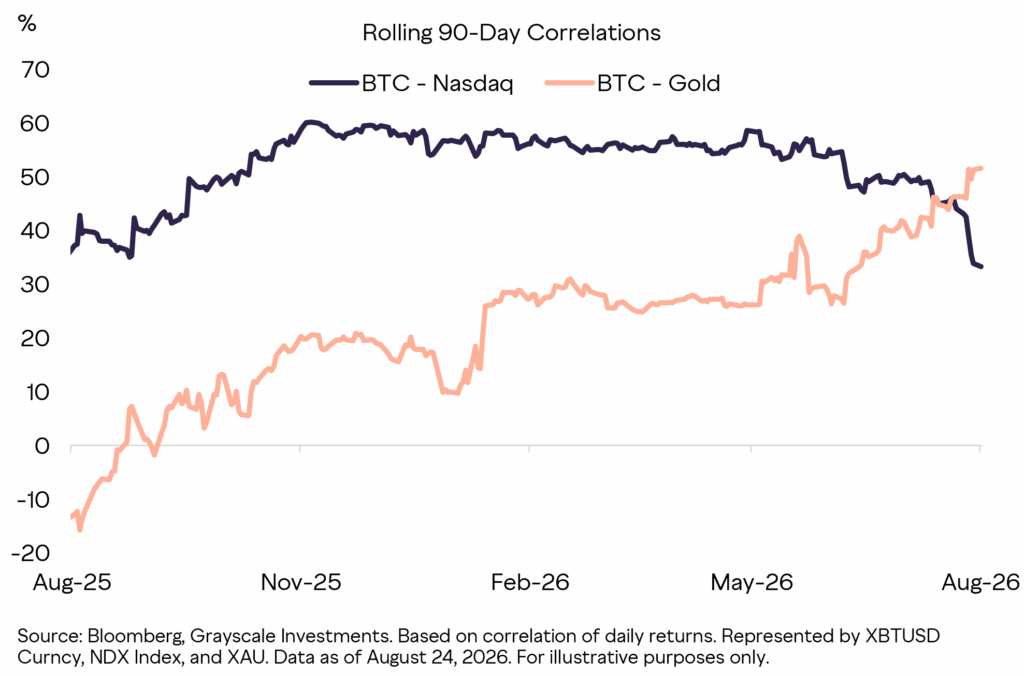
Bitcoin is moving away from its recent Nasdaq relationship as its correlation with gold rises, according to Grayscale research. Its 90-day correlation with the Nasdaq 100 has dropped from above 60% to about 33%, while its gold correlation rose from near zero to above 50%.
Bitcoin’s Nasdaq Correlation Drops
Zach Pandl, Grayscale’s head of research, said the shift followed a year when Bitcoin traded like a high-beta risk asset. That period coincided with an artificial intelligence-driven rally across risk assets, according to Pandl.
However, Bitcoin’s relationship with technology stocks has since weakened sharply. The 90-day correlation between Bitcoin and the Nasdaq 100 now stands near 33%. Previously, the measure had exceeded 60%.
At the same time, Bitcoin’s correlation with gold has climbed above 50%. The relationship stood barely above zero at the start of the year.
Debt And Yields Reshape The Backdrop
Pandl linked the change to renewed attention on what he called the debasement trade. U.S. federal debt recently surpassed $40 trillion. Meanwhile, long-term Treasury yields have risen as the Treasury curve sold off over the past year.
Larger debt balances and persistent deficits have also changed the broader macroeconomic backdrop. According to Pandl, those conditions have increased interest in assets that can hedge against weakening fiscal and monetary fundamentals.
That shift has also brought Bitcoin’s original design into focus. The network has no central issuer and follows a transparent issuance schedule.
Bitcoin’s Fixed Supply Draws Focus
Bitcoin has a maximum supply of 21 million coins. Pandl said its scarcity and monetary independence distinguish it from traditional financial assets.
He also described Bitcoin as a liquid alternative to gold as investors assess long-term fiat purchasing power. The asset’s different return drivers could also affect its role within diversified portfolios.
Grayscale said the changing correlations highlight Bitcoin’s relationship with both risk assets and scarce assets. The firm noted that digital assets may offer diversification benefits as market conditions change.