- Dogecoin established an early place in memecoin history, while Shiba Inu developed a broader ecosystem around its original meme.
- PEPE is based on internet humor, BONK is in touch with Solana, and FLOKI has a by-product and utility component.
- Community, attention, and timing shaped these projects, but Terrarmy warns that past success cannot guarantee future returns.
DOGE, SHIB, PEPE, BONK, and FLOKI have all been part of the memecoin ecosystem, carving out a niche for themselves within the broader cryptocurrency space.
DOGE and SHIB Built Strong Recognition
In a post, Terrarmy mentions five well-known tokens that constructed cultures as well as hype. Dogecoin is an original memecoin name and Shiba Inu is a project that evolved into an ecosystem, the account states. It sees these histories as shared by the factors of community, attention and timing.
Dogecoin has become famous for its reputation as the cryptocurrency supporting the Shiba Inu dog and earned its place in the crypto market. It has become a benchmark for future meme-coin ventures. The local population of DOGE is the focus of its public image.
Shiba Inu started with a meme but really had bigger plans from there. Its ecosystem gave the project a wider presence than a token built solely around a joke. Terrarmy cites this expansion as part of SHIB’s story.
The two projects show different ways a memecoin can build recognition. DOGE is connected to the early development of the category, and SHIB to the development of the ecosystem. Their histories do not ensure that either token will outperform competitors in the future.
PEPE, BONK and FLOKI Take Different Routes
PEPE draws on internet culture through its recognizable frog character. Terrarmy points to its market history as an example of online attention translating into substantial value. That connection also shows how quickly sentiment can become important to a meme-driven token.
BONK has become a notable name within the Solana ecosystem.It is not just associated with an internet character, but a blockchain community. This association sets BONK apart from tokens based on other networks and audiences.
FLOKI has pursued products and utility beyond its original meme branding. The project’s approach aims to give its community more to follow than online jokes alone. The longer term position will rely on the development of those initiatives and the number of users attracted.
These projects have different histories and strategies. PEPE is heavily inspired by internet culture, BONK has a tie to Solana, and FLOKI is all about utility. Their different paths illustrate the range of identities within the memecoin market.
Community and Timing Shape the Competition
Terrarmy’s central point is that attention, community, and timing helped shape successful memecoin stories. A token can be shared with a broader audience by going online, and an active community can keep it visible. Neither of these is a sure sign of interest or continuing market demand.
Also, the timing of a token’s attention is influenced. A project can become recognized while there is a high level of interest in speculative assets. Traders may switch their focus to other tokens based on the changing market sentiment and move away from their initial favorites.
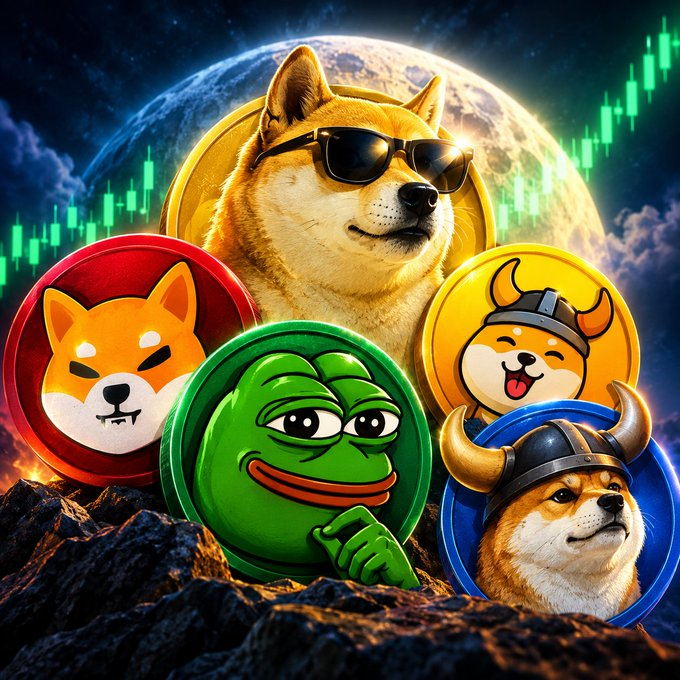
The following image brings DOGE, SHIB, PEPE, BONK and FLOKI together on a planetary backdrop. Green chart bars are behind the token symbols to indicate rising, lending a market theme to the image. The artwork does not imply future price movements, but rather depicts these projects as competitors.
Terrarmy poses the question which meme-coin will stay the best ever? The answer will vary according to the value that is most important: cultural recognition, longevity, ecosystem growth, or market value. The five projects provide various examples, and the post does not state who wins.
The account also cautions that returns can’t be guaranteed and many memecoins fail. That’s the caution that’s at the heart of the comparison, because as the eyes of the market turn elsewhere, so does visibility. Community history can help to define a project, but it doesn’t eliminate risk from speculative tokens.