
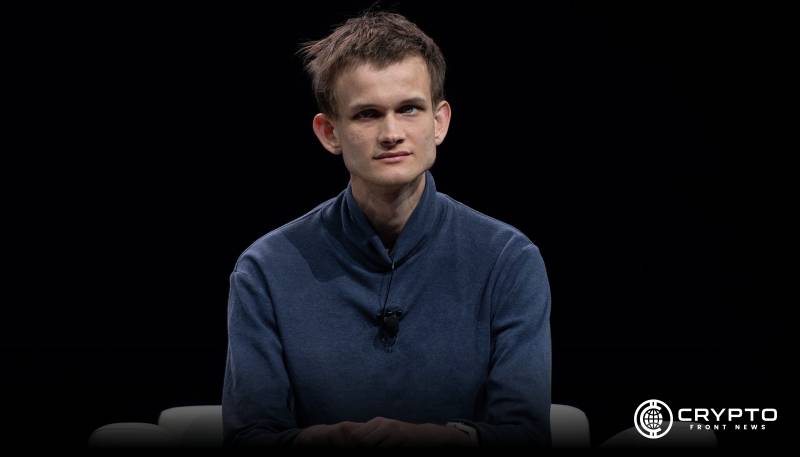
- Vitalik Buterin introduced Diamond iO, a proposed cryptographic framework for running encrypted software without exposing code or keys.
- The proposal could enable private onchain voting, secure key management, and privacy-preserving AI through encrypted computation.
- Buterin said Diamond iO remains an early research proposal requiring further optimization, peer review, and technical development.
Ethereum co-founder Vitalik Buterin introduced the second part of his cryptographic obfuscation series, presenting Diamond indistinguishability obfuscation (Diamond iO) as a proposed privacy framework. According to Buterin, the design aims to let users interact with encrypted software while keeping its code, logic, and keys hidden, supporting trustless blockchain applications without exposing sensitive information.
Diamond iO Expands Privacy Design
According to Vitalik Buterin, Diamond iO combines Fully Homomorphic Encryption with a modified Attribute-Based Encryption scheme. The proposal allows encrypted programs to process information while keeping their internal operations concealed.
Notably, Buterin said the approach could reduce execution requirements from a “universal-level” timescale to a “planet-level” timescale. However, he described the framework as a research proposal that still requires further study and peer review.
According to the proposal, Diamond iO could support several blockchain applications without revealing sensitive data. These include private onchain voting, secure private key usage, decentralized software licensing, and privacy-focused artificial intelligence systems.
The proposal also describes trustless infrastructure where developers can build Web3 services without exposing operational secrets. Meanwhile, blockchain networks would continue verifying execution while encrypted programs protect confidential information.
Focus Shifts To Voting And Secure Infrastructure
According to Buterin, one major use case involves private onchain voting without relying on centralized tallying bodies. Instead, encrypted software would count votes and publish results while preserving ballot privacy.
Current blockchain governance usually exposes wallet voting activity. However, the proposed framework seeks to keep voting choices confidential throughout the entire process.
The proposal also builds on previous privacy research. Earlier approaches, including Minimum Anti-Collusion Infrastructure and Interfold, relied on zero-knowledge proofs, fully homomorphic encryption, and threshold encryption.
Unlike committee-based systems, Diamond iO aims to remove trust assumptions by hiding program logic itself. Consequently, applications could process encrypted information without revealing underlying code or sensitive credentials.
Proposal Faces Technical Challenges
Despite the proposed benefits, Buterin acknowledged several technical limitations. Diamond iO requires significant computing resources and operates under strict circuit depth constraints.
Therefore, additional optimization and academic review remain necessary before practical deployment. According to Buterin, the framework represents another step in ongoing research into privacy-preserving cryptographic systems for Ethereum and broader Web3 infrastructure.