
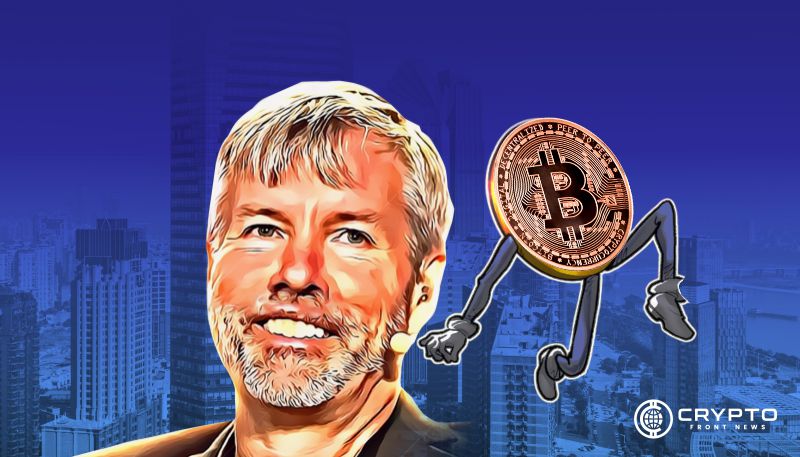
- Michael Saylor said Bitcoin will evolve through adoption and financial infrastructure, not frequent protocol changes.
- He believes institutional capital flows now influence Bitcoin more than the traditional four-year halving cycle.
- Saylor expects growth in Bitcoin-backed credit, ETFs, custody, and energy-linked mining infrastructure.
Strategy Executive Chairman Michael Saylor outlined his long-term outlook for Bitcoin, arguing that the network will evolve through broader financial adoption rather than frequent protocol upgrades. In a detailed statement released this week, Saylor said Bitcoin’s base layer will remain stable while capital markets, digital credit, and institutional participation expand around it.
Base Layer Stays Stable As Adoption Grows
According to Saylor, Bitcoin functions as a monetary network instead of a technology platform competing through constant feature releases. He said the protocol’s primary role remains high-value settlement, treasury reserves, collateral transfers, and final ownership transactions.
Meanwhile, Saylor said consumer payments, lending, banking services, stable-value products, and yield-generating applications will develop around Bitcoin instead of changing its foundation. He added that innovation will continue through wallets, Lightning, custody solutions, sidechains, and layered protocols.
Saylor also argued that protocol changes should remain rare. He said broad consensus should continue guiding upgrades to protect decentralization and Bitcoin’s monetary integrity.
Capital Flows Replace Traditional Cycle Focus
Building on that view, Michael Saylor said Bitcoin’s four-year halving cycle now plays a smaller role than institutional capital flows. According to him, exchange-traded funds, corporate treasuries, sovereign reserves, banks, insurers, derivatives, and structured credit increasingly shape Bitcoin’s market.
He described Bitcoin as digital capital, while identifying digital credit as the mechanism connecting the asset with the broader financial system. According to Saylor, Bitcoin-backed financial products allow capital to move across global markets without changing the underlying protocol.
Institutions And Infrastructure Expand
Saylor also discussed the growing importance of financial infrastructure surrounding Bitcoin. He said investors may access the asset through self-custody, exchange-traded funds, banks, companies, or Bitcoin-backed credit products.
However, he identified several risks that could affect the surrounding ecosystem. These include custodial concentration, excessive leverage, paper Bitcoin, regulatory oversight, and fee-market development as mining rewards decline.
Additionally, Saylor said Bitcoin mining will become more closely linked with energy infrastructure and capital markets. He expects mining companies to compete through power agreements, treasury management, and grid relationships rather than hardware alone over the coming decade.