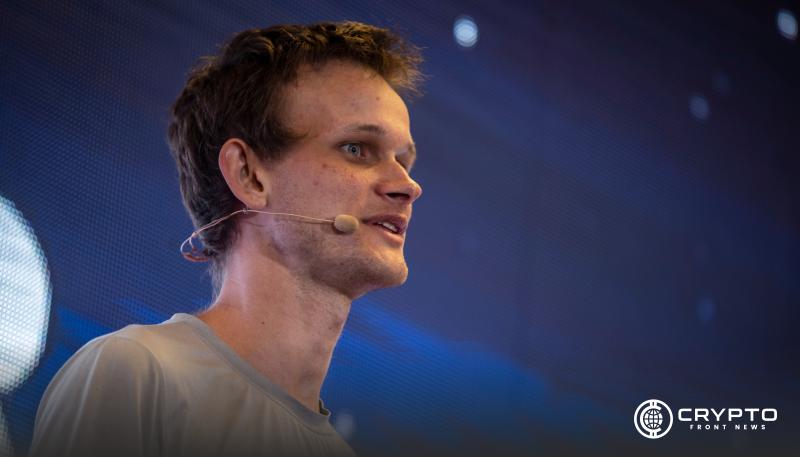
- AI and crypto privacy now intersect; local agents and mixers protect sensitive data in an evolving digital world.
- Vitalik Buterin stresses full-stack privacy; developers must rethink apps without compromising Ethereum’s core principles.
- Mixers legally safeguard transactions, but decentralization risks misuse, highlighting privacy’s complex balance.
Crypto privacy is becoming urgent as AI integration expands, according to Soul Wallet founder Zeng Jiajun. He highlighted that while few users focus on crypto privacy, nearly everyone worries about AI agent safety. Consequently, demand for secure local computing, like Mac Minis, has surged.
Moreover, Ethereum co-founder Vitalik Buterin reinforced this, emphasizing that privacy remains critical for digital applications. “Crypto privacy is needed if you want to make API calls without compromising the information of your access patterns,” he said.
He added that even local AI agents can expose sensitive activity if search or network patterns are visible. Buterin stressed that comprehensive privacy requires a full-stack approach, with local AI agent layers forming a crucial foundation.
CROPS and Innovation at the Application Level
Besides user-level safeguards, Buterin urged developers to rethink application architecture while preserving Ethereum’s core principles. He coined the acronym CROPS—censorship resistance, open source, privacy, and security—to guide development.
“We should not compromise on core properties. But at the application and interface level, we should be ready to step out of our comfort zone and rethink established concepts,” he wrote.
Additionally, the U.S. Treasury recognized that crypto mixers can legally protect user privacy. The report to Congress, titled “Innovative Technologies to Counter Illicit Finance Involving Digital Assets,” acknowledged that mixers help individuals conceal sensitive payment or donation data on public blockchains.
However, the Treasury also warned that decentralized, non-custodial mixers can facilitate money laundering or illicit fund transfers, including attacks by North Korea-linked hackers. Custodial mixers, by contrast, may provide some user traceability.
Privacy as the Foundation of Digital Freedom
Consequently, Ethereum leaders see privacy as a pillar of digital freedom. Buterin argued that the next innovation wave will emerge at the application level, requiring developers to restructure parts of the current stack. Moreover, as digital asset use expands for payments, mixers could become vital for maintaining financial confidentiality.
Hence, both crypto and AI privacy converge as developers face pressure to balance usability, safety, and freedom. According to Zeng and Buterin, safeguarding data and transaction patterns today ensures trust in the rapidly evolving digital ecosystem.