
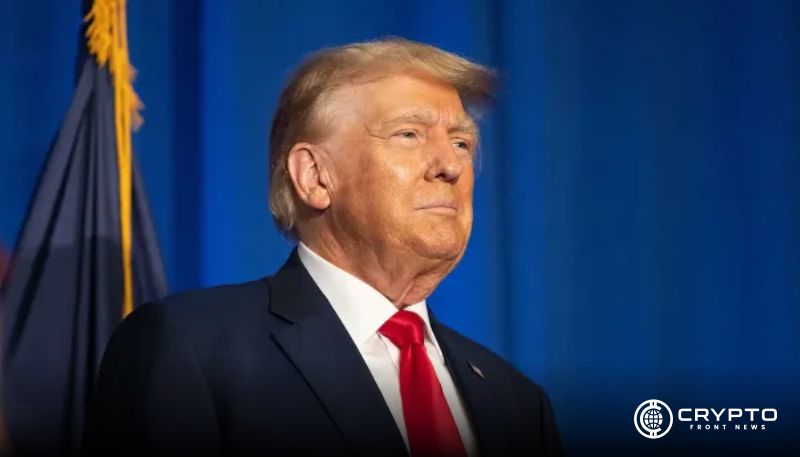
- Trump-linked crypto startup sold 49% to UAE royal for $500M, stirring political and financial scrutiny.
- Deal tied to AI chip access, UAE tech firms, and billions in stablecoin moves, highlighting global tech stakes.
- Senators warn of foreign influence in crypto, though Trump and WLFI deny policy impact or wrongdoing.
A high-stakes financial move by the Trump family has sent ripples through crypto and politics. World Liberty Financial, a cryptocurrency startup linked to President Donald Trump, sold a 49% stake to an Abu Dhabi royal for $500 million, The Wall Street Journal reported.
The transaction, executed by Aryam Investment 1—backed by Sheikh Tahnoon bin Zayed Al Nahyan—occurred just days before Trump returned to the White House. Half of the payment, approximately $187 million, went directly to Trump family-controlled entities, with additional tens of millions flowing to co-founders, including relatives of US Middle East envoy Steve Witkoff.
The deal, signed by Eric Trump, remained undisclosed until later statements by World Liberty revealed the family’s reduced stake. Besides shifting ownership, the transaction intertwines the startup with key geopolitical players.
Sheikh Tahnoon, UAE president’s brother and national security adviser, is pivotal in Abu Dhabi’s AI strategy. Under the Biden administration, his attempts to secure advanced US AI chips faced limitations due to concerns over Chinese access. However, Trump’s election accelerated these efforts. Tahnoon met Trump and senior officials multiple times, eventually securing US approval for hundreds of thousands of AI chips annually.
Strategic Financial and Tech Moves
Moreover, the deal included executives from G42, a UAE tech giant, managing Aryam Investment 1 and joining World Liberty’s board. Consequently, Aryam became the startup’s largest outside shareholder. Weeks before a US-UAE chip framework announcement, another Tahnoon-led firm, MGX, used World Liberty’s stablecoin to inject $2 billion into Binance.
Additionally, Democratic senators raised alarms over potential foreign influence in token sales. Senators Elizabeth Warren and Jack Reed highlighted that WLFI governance tokens were allegedly purchased by addresses linked to North Korea, Russia, and Iran.
World Liberty and the White House deny wrongdoing, emphasizing that Trump had no role in the deal and it did not influence policy. However, the reporting intensifies scrutiny on how crypto firms operate at the intersection of politics and finance.
Regulators now face questions regarding disclosure, compliance, and foreign investment risks. This case highlights the growing complexity when private crypto ventures intersect with global geopolitics and high-level technology access.