- Supply the chart shows that the total value of tokenized assets increased from $0.7 billion in 2021-$38.8 billion in 2026 year-to-date.
- Ondo brings traditional financial products like Treasuries and equities to the tokenized asset space.
- Market value alone cannot establish trading activity, investor access, or Ondo’s share of the expanding tokenized asset market.
Total value of tokenized assets increased 500,000-fold, growing from $0.7 billion in 2021 to $38.8 billion in 2026.
Tokenized Assets Record Rapid Market Growth
The chart shows that the growth is steady and begins to rise significantly in 2023.Market value in 2023 was USD 1.7 billion and USD 1 billion in 2022. Total reached $10.1 billion by 2024.
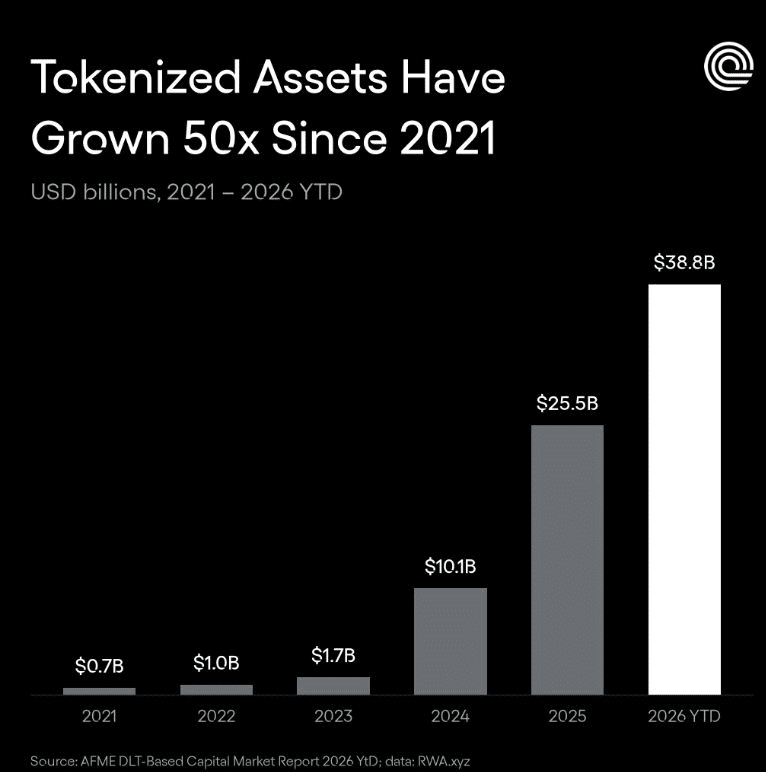
The value reported for the increase went up to $25.5 billion in 2025. The YTD total for 2026 is $38.8B. But that is not an actual calendar year.
The biggest increase was in 2024 with a total increase of almost six times. The following year added another $15.4 billion to the reported market value. The latest figure adds $13.3 billion beyond the 2025 total.
These figures describe the market’s reported value rather than its daily trading activity. They also fail to identify the quantity of investors who are trading tokenised financial products. Trading volumes and ownership figures would provide additional context.
Ondo Brings Traditional Financial Products On-Chain
ALLINCRYPTO linked the market’s expansion to Ondo and blockchain-based financial products. The post identified stocks and US Treasuries as examples of assets being tokenized. It described Ondo as a leading participant in this developing market.
Tokenization creates digital representations of assets through blockchain-based systems. Depending on their structure, these products can provide exposure to traditional financial instruments. Their ownership rights and redemption conditions depend on the arrangements governing each offering.
Tokenized Treasuries connect blockchain users with products linked to government debt. Tokenized equities extend similar arrangements to stock-market investments. These products remain distinct from cryptocurrencies because their value relates to underlying financial assets.
Ondo’s position in this sector places its offerings within a growing market. However, the supplied chart does not identify individual issuers or their respective market shares. It therefore cannot establish how much of the reported growth belongs to Ondo.
Market Growth Faces Practical Tests
A higher reported value does not necessarily imply improved liquidity or greater accessibility to investors. There are also products that could have a large stake but do not trade on the secondary market often. Some other people might support other uses, such as lending and using as collateral.
The other factor that investors consider is who the owner of the investment is and how secure the investment is. Redemption procedures and accurate pricing matter when products represent traditional financial assets. Access may also depend on eligibility rules and the jurisdictions involved.
The supplied material does not include a current ONDO token price. It also provides no figures linking token performance directly to the market’s expansion. Those measurements would be needed to assess price movements against sector growth.
The distinction between market expansion and individual project performance remains important. A growing category does not guarantee that every issuer will attract equal demand. Ondo’s position would require separate figures on its products and activity.
The chart shows that the value of the tokenized asset has risen significantly since 2021. This growth was especially marked from 2024. The growth will be determined by how these products meet the needs of investors and financial markets.