- SEC allows advisers to treat state-chartered trusts as qualified crypto custodians under strict conditions.
- Analysts view the move as a shift toward clearer rules, with Project Crypto signaling broader regulatory openness.
- DePIN token models gain distinction from securities as rewards for network participation, not investment schemes.
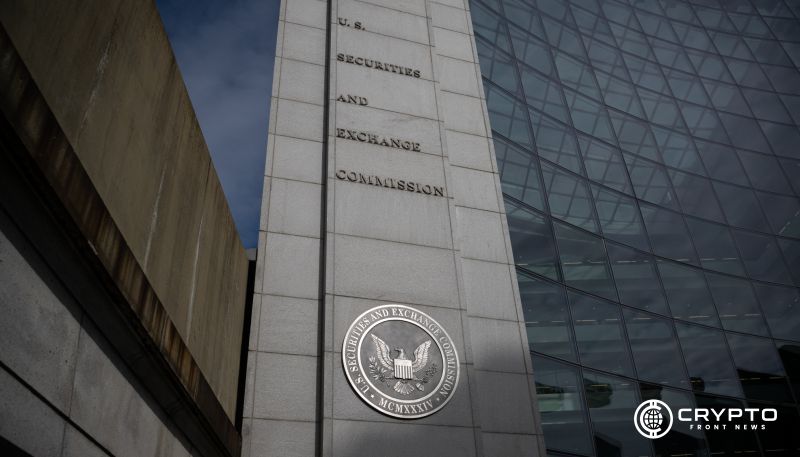
The U.S. Securities and Exchange Commission has taken a notable step toward widening custody options for crypto assets. In a no action letter issued Tuesday, the agency said it would not pursue enforcement against registered investment advisers or crypto fund issuers that use state chartered trust companies as custodians. The decision is a shift from the SEC’s earlier stance under former Chair Gary Gensler, who applied tighter boundaries to entities handling digital assets.
State Trusts Cleared for Custody Roles
According to the SEC’s Division of Investment Management, advisers may treat state chartered trust companies as banks under the Investment Advisers Act of 1940, provided both parties meet specific standards.
The agency stressed that the letter does not change existing laws or carry legal force. However, it clarified that advisers must verify that a chosen trust holds authorization from relevant banking regulators to provide crypto custody services.
Additionally, custodial agreements should prohibit trusts from lending or using client funds without explicit approval. They must also ensure that crypto assets remain segregated from the trust’s own holdings. The SEC emphasized that advisers retain responsibility for determining whether a trust arrangement serves the best interest of clients or regulated funds.
Industry Analysts Welcome Regulatory Clarity
Bloomberg ETF analyst James Seyffart called the development “a textbook example of more clarity for the digital asset space” in an X post. His remarks reflect a growing expectation within financial circles that the SEC may continue recalibrating its oversight approach.
In July, Chair Paul Adkins announced “Project Crypto,” an initiative aimed at lowering regulatory burdens while integrating digital assets into the broader financial system. The Investment Advisers Act requires client assets to be held with a bank, trust, or qualified custodian.
Crypto advocates have long used that framework to expand custody options. Now, affiliates of firms such as Coinbase and Ripple may qualify through state-chartered trust entities, pending compliance with SEC guidelines.
No-Action Stance Extends to Token Distribution Models
The SEC recently issued a separate no-action letter concerning DoubleZero’s token distribution model for decentralized physical infrastructure networks, or DePIN. The agency acknowledged that such networks distribute tokens as compensation for services like storage or bandwidth rather than as speculative investments.
These incentives do not resemble capital-raising transactions typically evaluated under the Howey Test. The SEC noted that DePIN models rely on programmatic distribution instead of fundraising from investors seeking returns.
This distinction places them outside traditional securities classifications. Regulators said their role is to assess these structures within statutory limits rather than reshape emerging economic systems.