
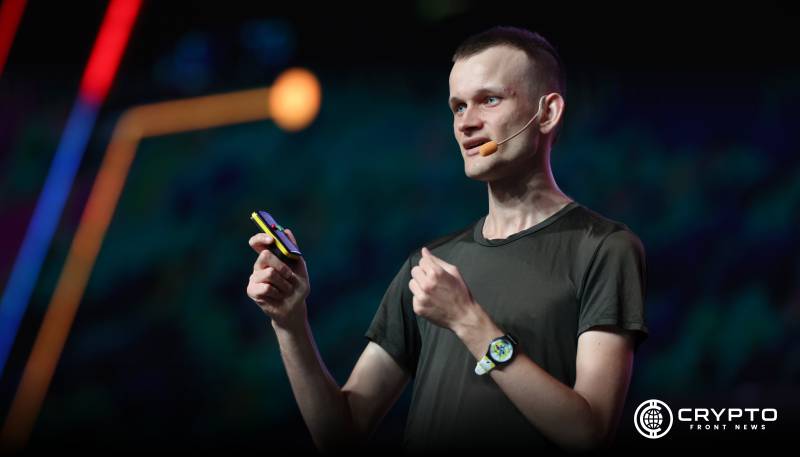
- Vitalik Buterin says ZK-SNARKs remove past tradeoffs, enabling strong chain verification without full transaction re-execution.
- Real-world outages, censorship, and validator concentration pushed Buterin to value direct user verification as a safety fallback.
- He now views self-sovereign verification as resilience insurance, not a “mountain man” ideal, strengthening user leverage.
Ethereum co-founder Vitalik Buterin has publicly revised a long-held blockchain view, addressing it in a recent written post. He explained why improved cryptography, real-world failures and user risk changed his thinking on blockchain verification and self-sovereignty.
2017 Debate Framed the Original Disagreement
In 2017, Buterin debated Ian Grigg over how blockchains should record information. Grigg argued blockchains should preserve transaction order, not explicit state like balances or contract storage.
However, Buterin opposed that design because users would need full historical processing or third-party trust. According to Buterin, Ethereum’s state-root commitments allow direct state verification using Merkle proofs.
Notably, this model depends on an honest majority among consensus participants. At the time, Buterin viewed full personal verification as impractical and unnecessary for average users. He described it as a “mountain man fantasy” in a previous post.
ZK-SNARKs Changed the Technical Tradeoffs
However, Buterin now cites ZK-SNARKs as the decisive technical shift. He explained that zero-knowledge proofs allow chain correctness verification without re-executing all transactions. Consequently, users can gain strong guarantees without massive computation.
According to Buterin, this removes the earlier cost-versus-security tradeoff. He compared the advance to eliminating a major constraint in past blockchain scaling debates. Therefore, older compromises deserve reassessment as technology improves.
Real-World Failures Reshaped His Perspective
Beyond technology, Buterin emphasized real-world fragility. He listed network outages, extreme latency, service shutdowns, validator concentration, and application censorship. Notably, he referenced Tornado Cash as an example where intermediaries restricted access.
In such cases, direct chain interaction becomes the only option. Buterin argued that relying on developers during crises creates centralization risks. Instead, he reframed the “Mountain Man’s cabin” as a fallback, not a lifestyle. According to Buterin, maintaining that option strengthens user leverage and system resilience.